
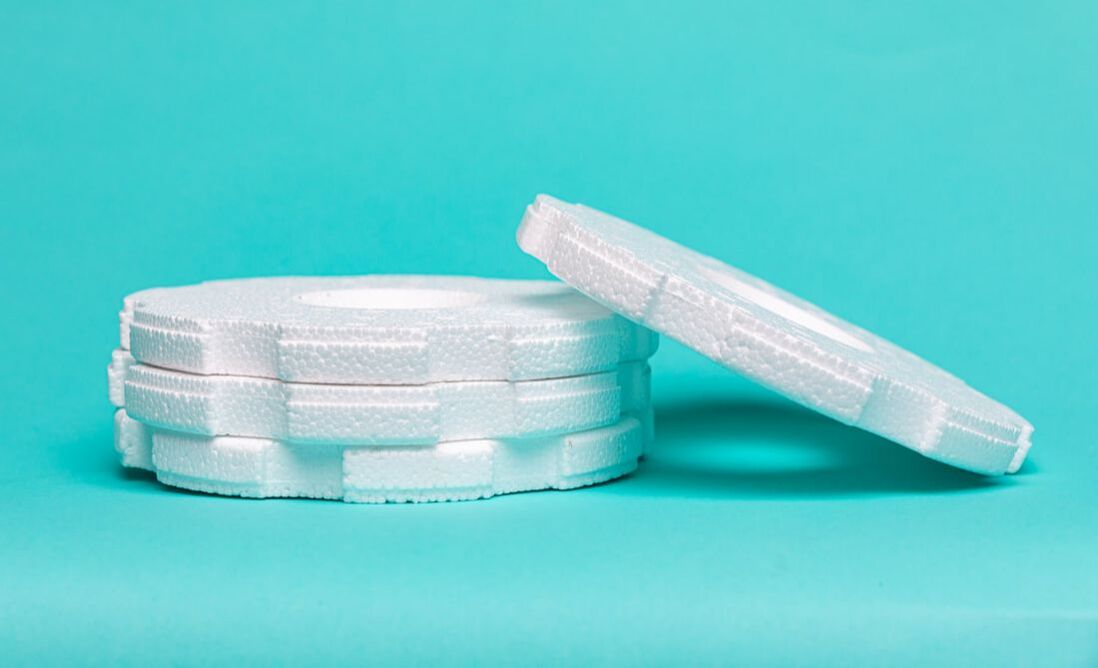
Material selection begins with what a part must do. A packaging insert may need to absorb impacts and limit movement. A molded component may need rigidity, insulation, buoyancy, or a repeatable shape. Expanded polystyrene, commonly called EPS, brings several useful characteristics together in one material.
1. Lightweight
Most of an EPS part’s volume is air. That keeps molded parts easy to handle and can help control finished package weight. Lower weight may also simplify assembly and reduce unnecessary freight burden when the foam geometry is designed efficiently.
2. Rigid and shape-retaining
EPS is lightweight but not limp. A molded part can hold defined contact points, clearances, channels, and locating features. This is useful when a product needs to remain positioned inside a carton or when a component must maintain a consistent production shape.
3. Cushioning and impact management
The foam structure can absorb and distribute energy when a package is dropped or experiences an impact. Performance depends on density, thickness, geometry, product weight, and the conditions the package must survive. Those requirements should be considered together rather than selecting foam by appearance alone.
4. Thermal insulation
EPS has a closed-cell structure that slows heat transfer. That property supports insulated containers, building products, refrigeration applications, and other components where temperature separation matters.
5. Low water absorption
EPS does not readily absorb large amounts of water. This can make it useful for damp environments, flotation products, marine components, and applications where occasional moisture exposure is expected.
6. Recoverable where programs exist
Clean EPS can be collected, densified, and reprocessed into other products where suitable recycling programs and end markets are available. The practical recovery path depends on local collection options, cleanliness, labels, adhesives, and the overall packaging design.
Choosing the right EPS approach
Share the product dimensions, weight, drawings or samples, expected handling conditions, target quantities, and any density or performance requirements you already know. Clyde Foam can use that information to discuss whether a custom molded EPS solution is a practical fit.